Crossing the Blues
Showing posts with label Technology. Show all posts

Audi Sound Concept features 62 speakers


Audi Sound Concept is the most advanced project of the entertainment development engineers in Ingolstadt. The project is internally dubbed the Audi Sound Concept and is being tested on a Q7 model. This design boasts an insane 62 speakers in the vehicle, consisting of five woofers, five tweeters and fifty-two mid-range speakers in the instrument panel beneath the windshield, in the roof pillars, and in the doors.

The system consists of five tweeters spread between the dashboard and the rear seating area, a woofer in each of the four doors, a single subwoofer out back, and a whopping 52 midrange speakers wrapping the perimeter of the cabin and enveloping the passengers in 360 degrees of sound. You're definitely not going to want to crank this rig up to 11.

Moreover, five units are integrated into each door sill, thanks to modifications that included cutouts in the sheet metal, new bezels and lower interior door release handles.

Development of the system took place in both the €100,000 listening facility and the €10 million audio lab at Audi HQ in Ingolstadt.


Audi Sound Concept Audi Sound Concept Audi Sound Concept Audi Sound Concept Audi Sound Concept Audi Sound Concept


Press Release

New approaches to perfect sound - Hi-fi expertise at Audi

High-end quality for listening pleasure is a field of technology that is becoming increasingly important. Audi is taking the lead in the advancement of this technology. Audi's successful collaboration with premium suppliers Bang & Olufsen and Bose is already setting standards, and the Audi development engineers have also established broad-based proprietary know-how independent of these partnerships. Their latest project takes an entirely new technical approach - and could turn out to be the next revolution in the hi-fi sector.

62 speakers: the Audi Sound Concept project

Peter Gleim's eyes light up when he cranks up the volume. The engineer works in Infotainment Development at Audi in Ingolstadt, where he heads the Audi Sound Concept project. His test subject is a Q7: Standard on the outside, interior modifications have transformed it into a rolling hi-fi studio that takes a radically new approach.

The idea behind Audi Sound Concept is a physical principle called wave field synthesis, which states that the front of any individual wave can also be considered as superposition of individual waves. In the world of acoustics this means that a sound wave can be recreated by a multiplicity of small sound sources placed closely adjacent to one another along the wave front.

The principle was first put into practice by Dutch scientists in the late 1980s, and it can be experienced today in a movie theater in Ilmenau, in the German state of Thuringia. Each of the 192 individual speakers at the Linden Lichtspiele movie theater is driven separately by a fast computer - at the precise moment in which the virtual wave front would pass through its point in space. Some signals are delayed by milliseconds, depending on the location of the speaker. The result is fascinating: Each moviegoer experiences perfect audio spatialization in optimal sound.

One of the driving forces in the field of wave field synthesis is the Fraunhofer Institute for Digital Media Technology (IDMT) in Ilmenau. Audi began its development work in collaboration with the IDMT five years ago. The current status of the project is the Q7 prototype, which is parked in a workshop. A powerful amplifier takes up most of the space in the luggage compartment, and thick cables connect it to three PCs.

Installed in the Audi Q7 are 62 speakers - five woofers and five tweeters plus 52 mid-range speakers in the instrument panel beneath the windshield, in the roof pillars and in the doors. Five units are integrated into each door sill - with Audi-typical perfect workmanship. Specialists made cutouts in the sheet metal, fabricated new bezels and lowered the interior door release handles.

"Prepare to be amazed," says Gleim, as his eyes light up and he cranks up the volume. A sound like a thunderhead issues from the speakers - an artful mix of music, traffic noise and animal sounds. A female narrator guides the listener through the acoustic hubbub, dancing past the listener on the right and at other times on the left. The whole time the listener's ears are surrounded by the sounds of driving cars and roaring lions. A marching band seems to march from side to side through the Q7 before finally a helicopter flies a lap around the cabin below the headliner.

"That is specially created wave field material," says Gleim, "comprising up to 32 tracks, with specific spatial information for each of those tracks." There are no corresponding audio media available on the market because there are no playback devices, either. A few film studios are already producing films with the method, however."

New stereo sound: the wide virtual stage

Wave field synthesis is not dependent on special material to demonstrate its strengths, however. It also coaxes entirely new acoustic images out of conventional stereo signals. As Gleim explains, "We can simulate any wave front. With stereo, we can generate a sound as if the two speakers were located far outside the car. And we can also add any desired spatial impression computationally - not as a sound effect, but as a mathematically precise simulation."

The sample for this is also very convincing. The vocals come from far off to the left, seemingly from the corner of the workshop, with the guitar coming from the other corner. This impression remains the same regardless of whether the listener is behind the wheel or on the back right seat of the Audi Q7. And sound quality is always first class - with sparkling trebles, crystal-clear midrange and dry bass. Even the slight buzz as the guitarist's fingers hit the strings makes its way to the ear with extreme precision.

"Our goal was to show what is technically feasible; to explore the limits," explains Denis Credé, Head of Sound Development at Audi. "What we are learning will be integrated into the sound systems of tomorrow. It's like with racing: A lot of what is first tried out on the race tracks of this world later shows up in modified in production vehicles. The Audi Sound Concept project is like racing for sound systems."

Wide-ranging know-how: Entertainment Development at Audi

Audi Sound Concept is the most advanced project of the entertainment development engineers in Ingolstadt. Audi has accumulated broad-based know-how in hi-fi technology in just a short time. The brand began collaborating with the upscale American supplier Bose a good twenty years ago; the collaboration with Bang & Olufsen began around the turn of the millennium.

Audi began offering the advanced sound system from the Danish sound wizards in the A8 luxury sedan in fall 2005. The 14 active speakers, including two acoustic lenses with anodized aluminum grilles, and 1,100 watts of amplifier power brought high-end sound to the automobile direct from the factory for the first time. The openly proclaimed collaboration between the two companies was another first in the European automobile industry. It proved to be a tremendous success for both sides - the advanced sound system has a penetration rate of greater than 10 percent in both models, the A8 and Q7, in which it is available.

If a new Audi model is to be equipped with a new premium or advanced sound system, the development work is performed primarily at Bose or Bang & Olufsen. The Audi engineers prepare precise requirement specifications in which the system layout - the type, number and installation location of the speakers - plus the speaker characteristics, the design of the amplifier and a target sound appropriate for the vehicle are defined.

Prototype vehicles are sent to Esslingen, Germany, and Struer, Denmark, where the partners work on the speakers, enclosures, amplifiers and acoustic algorithms. The last step is fine-tuning the sound, which is performed together with the Audi specialists in Ingolstadt. The "Sound Commission," a body comprising representatives from all units of the company, is responsible for final acceptance and approval.

How close does the high-end sound in a new Audi A8 come to the reality of the recording? "The determining factors are always the installation locations in the car and the quality of the components," explains Gleim. "When you order a car with the advanced sound system, you get the best speakers available anywhere. Many of them have membranes made of a fiberglass composite, which has a very natural and linear sound."

Pure sound is technically feasible - but not desired. "A linear frequency response in the car would be boring," says Gleim. The tight interior does not allow the sound to spread out like in a living room. Cushions and upholstery absorb it, which is why the low frequencies must be overdriven to a certain extent. The electronic fine-tuning - the tweaking of the algorithms in the sound processor - handles this.

"We deliver a certain fun factor with our compact and sporty models," explains the sound development engineer. "In the A8 and Q7, however, the sound is more subtle and natural. There is no ultimate ideal, though, because each person perceives sound in their own unique way."

Proprietary development: the Audi sound systems

Below the high-end and premium systems, Audi offers additional systems such as the Audi sound system, which also uses impressive technology to produce excellent sound quality. Because Audi alone is responsible for the design and tuning of these systems, the development engineers have developed an extensive foundation of expertise.

The Electronics Center established at the Ingolstadt plant in 2003 includes a sound laboratory, where the sound systems undergo rigorous testing during the development phase. The engineers test the speakers and amplifiers offered by the suppliers, beginning with the very first sample level and assess the quality delivered, in part by means of exhaustive listening comparisons.

The laboratory features equipment valued at nearly €10 million - from the microphones and the special amplifier test bed custom-developed to Audi specifications to the laser vibrometer. The latter uses a laser to scan the surface vibrations that occur on the speaker membrane, the speaker housing or the door in which the speaker is installed.

The color graphics produced precisely indicate if the membrane does not oscillate properly across its entire surface. "Weaknesses in a speaker are very often a simple question of design," says Gleim's colleague, Wolfram Jähn. "In many cases, the manufacturer can resolve these with minor changes, such as details of the curvature or the overlap between the paper and the rubber at the bead."

Speakers are analyzed at the Audi sound laboratory in a testing room, which is a room-in-room construction. The testing room is mounted on thick elastomer bearings and is completely decoupled from the rest of the building. An absolute necessity given its direct proximity to a roller dynamometer.

All six sides of the testing room feature large fiberglass wedges covered in silk that break up the sound. A floating wire lattice serves as the floor.

The testing room is acoustically dead - the human voice loses its richness here. The room is also often used to refine operating noises in the cabin, i.e., to fine tune clicking rotary knobs and switches. "As far as we know, none of our competitors have such a facility," says Jähn.

The listening room: resetting your ears

Whereas the testing room is used for mathematical analysis, the adjacent listening room is tailored for the subjective experience. It, too, is an acoustically optimized room-in-room construction - the special wooden double walls backed with insulation only allow the linear reflections desired. The precisely calibrated, high-end sound system installed here costs around €100,000 and its tube-based end stages are the size of small refrigerators.

"The listening room is our acoustic magnifying glass," explains Jähn, "where we check what really is on a CD or DVD. This is important because your ears quickly get used to a sound and sometimes interpret errors as interesting effects. We test our sample speakers blind. We can compare them to the optimum and reset our ears."

Thanks to these detailed tests and comparisons, the sound development engineers at Audi can define detailed specifications for the speaker suppliers.

Another element for success is the tight networking between Technical Development, Production and Quality Assurance at Audi. This enables requirements from daily production work and the real-world customer experience to flow into the development of new sound systems.

The quality of the sound systems has gotten significantly better in recent years as a result, according to Gleim. And the engineers are constantly learning - at a rapid pace, day-in, day-out. Audi will further strengthen its leadership position in the high-end sector.

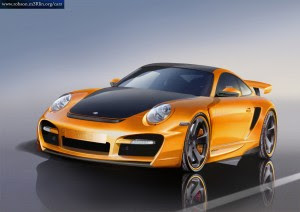
Concept car Porsche 911 Turbo TechArt GTstreet Model 997

Concept car Porsche 911 Turbo TechArt GTstreet Model 997Design Interior Cockpit Porsche 911 Turbo TechArt

The cockpit of the TechArt GTstreet also differs distinctly from the stock 911 Turbo. Among the differences is an exclusive leather interior with color-contrasted stitching and sporty CarboBlack highlights. The coupe is further equipped with an ergonomically shaped TechArt sport steering wheel, aluminum foot pedals, foot rest and shifter, as well as with illuminated door sills sporting the TechArt logo.

Concept car Porsche 911 Turbo TechArt GTstreet Model 997Cool Porsche 911 Turbo TechArt in the Front

German TechArt studio will present in Geneva its latest tire-burner based on the current Porsche 911 Turbo 997 series super-coupe. While most tuners focus their efforts on eye-popping exterior enhancements, TechArt’s engineers have centered their attention

Concept car Porsche 911 Turbo TechArt GTstreet Model 997Porsche 911 Turbo TechArt with based on Design

With its 2001 TechArt GTstreet, based on the Porsche 911 Turbo of the 996 model series, TechArt created one of the fastest and most powerful street-legal sports cars of its time. The next evolutionary stage of this fascinating concept celebrates its world debut at the Geneva Motor Show 2007. The new TechArt GTstreet, based on the 911 Turbo of the latest 997 series, starts at $320,000. Like the predecessor the new GTstreet edition centers on a powerful engine. The 3.6-liter twin-turbo flat engine is modified by the TechArt engine specialists and now develops 630 bhp at 6,800 rpm, up from standard 480 bhp. Peak torque increases to 605 lb-ft at 4,500 rpm.

Concept car Porsche 911 Turbo TechArt GTstreet Model 997Porsche 911 Turbo TechArt on Back Body

The TechArt GTstreet rear fascia with integrated carbon-fiber diffuser contributes to the strong downforce generated on the rear axle. It also provides the perfect backdrop for the quad exhaust of the TechArt high-performance exhaust system. TechArt Automobildesign offers a number of versions of its popular Formula wheel in sizes 8.5Jx20 in front and 12Jx20 on the rear axle. GTstreet buyers can choose from several color combinations and between the one-piece Formula and the multi-piece Formula II designs. The Formula II wheel features an exchangeable wheel lip. For optimal tires TechArt chose ContiSportContact 3 high-performance tires in sizes 245/30 ZR20 and 325/25 ZR20. The large 20-inch wheels also provide the necessary space for the especially powerful and durable TechArt high-performance brake system. It features six-piston aluminum fixed calipers and 390-millimeter discs on the front axle. The rear axle is fitted with 365-millimeter discs and four-piston fixed calipers. The TechArt GTstreet comes with a TechArt VarioPlus coil-over suspension that is based on the electronically adjustable PASM damping system of the 911 Turbo. This chassis allows individual ride-height lowering by up to 25 millimeters and push-button selection of two different damper settings, “Normal” or “Sport.” However, the dampers are not limited to these presets. Sporty driving automatically results in firmer damper settings in both modes, thus combining excellent ride comfort during normal driving with agile and responsive handling during fast cornering.


Concept car Porsche 911 Turbo TechArt GTstreet Model 997Porsche 911 Turbo TechArt in Beside

The body kit for the TechArt GTstreet was created in the wind tunnel, and offers an optimal symbiosis of aerodynamic down force, minimized drag and striking design. The front fascia of the GTstreet with retractable carbon-fiber splitter produces down force on the front axle and provides radiator, oil coolers and brakes with more cooling air, thanks to its large, striking air inlets. The auxiliary headlamp units with daytime running lights and fog lamps improve active safety. They also give the car even more passing clout. The TechArt GTstreet fender flares on the front axle add 10 mm to the two-door’s width and give it an even more dynamic appearance. But that’s not all: The air outlets behind the front wheel houses optimize brake venting. The larger air ducts in the rear sidewalls provide engine and inter coolers with a larger supply of cooling air. For an optimal transition between front and rear fenders the TechArt designers have developed rocker panels that complement the new contours. TechArt mirror and headlamp moldings provide the finishing touches. The TechArt roof spoiler extends the roof line and optimizes airflow to the adjustable rear airfoil of the GTstreet.

Lotus Engineering demonstrates the lightweight future of the passenger car


Lotus Engineering conducted two studies to look at the possibility of developing passenger vehicles from 2017. The specialised lightweight sports car maker says its long-time philosophy of weight reduction will benefit potential customers in the areas of fuel consumption and C02 emissions.

company engineers discovered that by improving the aerodynamics by 80 counts, the car netted a six mile per gallon improvement in its highway fuel economy rating (note: a "count" is a thousandth of a point of a Cd number, so reducing a Cd of 0.150 by 50 counts would give you a Cd of 0.100). On the flipside, taking out 400 pounds of stuff only improved the car's highway mpg by one mile a gallon, though that's largely because of the Newtonian "an object in motion tends to stay in motion unless acted upon by an outside force" hubbub.

The interior systems include 50% lighter seats, climate control hardware, navigation electronics and others. There is a high level of component integration for space maximisation and weight minimisation. An example is the audio/ air conditioning/navigation touch screen which also contains the shifter and parking brake functions. Chassis and suspension components are to be downsized, the glazing and width of the windscreen possibly reduced and replaced with an appropriate, lower weight substitute.


Press Release
  • Study by Lotus Engineering concludes that a vehicle mass improvement
    of 38% versus a conventional mainstream vehicle can be achieved at only
    3% cost.
  • Efficient design and lightweight materials significantly reduce CO2
    emissions.

Lotus Engineering has conducted a study to develop a commercially viable
mass reduction strategy for mainstream passenger vehicles. This study,
released by the International Council on Clean Transportation, focused on
the use of lightweight materials and efficient design and demonstrated
substantial mass savings. When compared with a benchmark Toyota Venza
crossover utility vehicle, a 38% reduction in vehicle mass, excluding
powertrain, can be achieved for only a 3% increase in component costs using
engineering techniques and technologies viable for mainstream production
programmes by 2020. The 2020 vehicle architecture utilises a mix of stronger
and lighter weight materials, a high degree of component integration and
advanced joining and assembly methodologies.

Based on U.S. Department of Energy estimates, a total vehicle mass
reduction of 33% including powertrain, as demonstrated on the 2020 passenger
car model, results in a 23% reduction in fuel consumption. This study
highlights how automotive manufacturers can adopt the Lotus philosophy of
performance through light weight.

Dr Robert Hentschel, Director of Lotus Engineering said: "Lighter
vehicles are cleaner and more efficient. That philosophy has always been
core to Lotus' approach to vehicle engineering and is now more relevant than
ever. Lightweight Architectures and Efficient Performance are just two of
our core competencies and we are delighted to have completed this study with
input from the National Highway Traffic Safety Administration and the U.S.
Environmental Protection Agency to provide direction for future CO2
reductions. We believe that this approach will be commonplace in the
industry for the future design of vehicles."

The study investigated scenarios for two distinct vehicle architectures
appropriate for production in 2017 and 2020. The near-term scenario is based
on applying industry leading mass reducing technologies, improved materials
and component integration and would be assembled using existing facilities.
The mass reduction for this nearer term vehicle, excluding powertrain, is
21% with an estimated cost saving of 2%.

A benchmark Toyota Venza was disassembled, analysed and weighed to
develop a bill of materials and understand component masses. In developing
the two low mass concepts, Lotus Engineering employed a total vehicle mass
reduction strategy utilising efficient design, component integration,
materials selection, manufacturing and assembly. All key interior and
exterior dimensions and volumes were retained for both models and the
vehicles were packaged to accommodate key safety and structural dimensional
and quality targets. The new vehicles retain the vision, sight line, comfort
and occupant package of the benchmarked Toyota Venza.

Darren Somerset, Chief Executive Officer of Lotus Engineering
Incorporated, Lotus' North American engineering division which led the
study, said "A highly efficient total vehicle system level architecture was
achieved by developing well integrated sub-systems and components,
innovative use of materials and process and the application of advanced
analytical techniques. Lotus Engineering is at the forefront of the
automotive industry's drive for the reduction in CO2 and other greenhouse
gas emissions and this study showcases Lotus Engineering's expertise and
outlines a clear roadmap to cost effective mass efficient vehicle
technologies."

Mass and Cost Summary


Base
Toyota Venza

excluding powertrain


Lotus Engineering Design


System


Weight


(kg)


2020
Venza


2017
Venza


%
Mass Reduction


%
Cost Factor


%
Mass Reduction


%
Cost Factor


Body


383


42%


135%


15%


98%


Closures/Fenders


143


41%


76%


25%


102%


Bumpers


18.0


11%


103%


11%


103%


Thermal


9.25


0%


100%


0%


100%


Electrical


23.6


36%


96%


29%


95%


Interior


252


39%


96%


27%


97%


Lighting


9.90


0%


100%


0%


100%


Suspension/Chassis


379


43%


95%


26%


100%


Glazing


43.7


0%


100%


0%


100%


Misc.


30.1


24%


99%


24%


99%


Totals


1290


38%


103%


21%


98%


The full report, entitled ‘An Assessment of Mass Reduction Opportunities for
a 2017 - 2020 Model Year Vehicle Program' can be found at the following
link:

http://www.theicct.org/documents/0000/1430/Mass_reduction_final_2010.pdf

ENDS

The 2020 Passenger Car Technical Detail

Body

The body includes the floor and underbody, dash panel assembly, front
structure, body sides and roof assembly. The baseline Toyota Venza
body-in-white contained over 400 parts and the revised 2020 model reduced
that part count to 211. The body-in-white materials used in the baseline
Venza were 100% steel, while the 2020 model used 37% aluminium, 30%
magnesium, 21% composites and 7% high strength steel. This reduces the
structure mass by 42% from 382 kg to 221 kg.

The low mass 2020 body-in-white would be constructed using a low energy
joining process proven on high speed trains; this process is already used on
some low volume automotive applications. This low energy, low heat friction
stir welding process would be used in combination with adhesive bonding, a
technique already proven on Lotus production sports cars. In this instance,
the robotically controlled welding and adhesive bonding process would be
combined with programmable robotic fixturing, a versatile process which can
be used to construct small and large vehicles using the same equipment.

Closures/Fenders

The closures include all hinged exterior elements, for example, the front
and rear doors and the rear liftgate. One alternative approach included
fixing the primary boot section to improve the structure, reduce masses and
limit exposure to high voltage systems. A lightweight access door was
provided for checking and replacing fluids.

The closures on the baseline Toyota Venza were made up of 100% steel. The
low mass Venza closures/fenders would be made up of 33% magnesium, 21%
plastic, 18% steel, 6% aluminium with the other 22% consisting of multiple
materials. The mass savings are 41%, a reduction from 143 kg to 84 kg.

Interior

The interior systems consist of the instrument panel, seats, soft and
hard trim, carpeting, climate control hardware, audio, navigation and
communication electronics, vehicle control elements and restraint systems.
There is a high level of component integration and electronic interfaces
replace mechanical controls on the low mass model. For the 2020 model the
instrument panel is eliminated replaced by driver and passenger side modules
containing all key functional and safety hardware. A low mass trim panel
made from a high quality aerated plastic closes out the two modules. The air
conditioning module is incorporated into the console eliminating the need
for close out trim panels; heated and cooled cupholders are integrated into
the HVA/C module. The audio/HVA/C/Navigation touch screen contains the
shifter and parking brake functions and interfaces with small electric
solenoids. This eliminates conventional steel parking brake and shifter
controls and cables as well as freeing up interior space.

The front seats mount to the structural sill and tunnel structure
eliminating conventional seat mounting brackets (10 kg) and the need to
locally reinforce the floorpan. The composite front seat structure utilises
proven foam technology; the seat mass is reduced by up to 50%. The rear seat
support structure is moulded into the composite floorpan eliminating the
need for a separate steel support structure. The front and rear seats use a
knit to shape fabric that eliminates material scrap and offers customers the
opportunity to order their favourite patterns for their new vehicle. Four
removable carpet modules replace the traditional full floor carpeting; this
reduces mass and allows cost effective upgrading of the carpet quality. The
floorpan is grained in all visible areas. The 2017 production interior mass
was reduced from 250 kg to 182 kg with projected cost savings of 3%. The
2020 production interior mass was 153 kg with projected cost savings of 4%.

Chassis/Suspension

The chassis and suspension system was composed of suspension support
cradles, control links, springs, shock absorbers, bushings, stabilizer bars
and links, steering knuckles, brakes, steering gearbox, bearings, hydraulic
systems, wheels, tires, jack and steering column.

The chassis and suspension components were downsized based on the revised
vehicle curb weight, maintaining the baseline carrying capacity and
incorporating the mass of the hybrid drive system.

The total vehicle curb weight reduction for the 2020 vehicle was 38%,
excluding the powertrain. Based on the gross vehicle weight, which includes
retaining the baseline cargo capacity of 549 kg and utilising a hybrid
powertrain, the chassis and the suspension components were reduced in mass
by 43%, with projected cost savings of 5%.

Front and Rear Bumpers

The materials used on the front and rear bumpers were very similar to the
existing model to maintain the current level of performance. One change was
to replace the front steel beam with an aluminium beam which reduced mass by
11%. The use of a magnesium beam was analysed but at the current time
exceeded the allowable price factor.

Heating, Ventilation and Air Conditioning

The air conditioning system was integrated into a passenger compartment
system and an engine compartment system. This section addressed the under
hood components which included the compressor, condenser and related
plumbing. The under hood components were investigated for technologies and
mass.

The study showed a relatively small mass difference for the underhood air
conditioning components based on both vehicle mass and interior volume.
Because of the highly evolved nature of these components, the requirements
for equivalent air conditioning performance and the lack of a clear
consensus for a future automotive refrigerant, the mass and cost of the
Toyota Venza compressor, condenser and associated plumbing were left
unchanged for both the 2017 and 2020 models.

Glazing

The glazing of the baseline vehicle was classified into two groups: fixed
and moving. The fixed glass is bonded into position using industry standard
adhesives and was classified into two sub groups: wiped and non wiped.

Factors involved in making decisions about glazing materials include the
level of abrasion it is likely to see during the vehicle life, the
legislative requirements for light transmissibility, the legislative
requirements for passenger retention and the contribution it will make to
interior noise abatement.

The specific gravity of glass is 2.6 and the thickness of a windshield is
usually between 4.5 mm and 5 mm, therefore the mass per square metre of 5 mm
glass is approximately 13 kgs. The high mass of glass provides a strong
incentive to reduce the glazed area of the body, reduce the thickness of the
glass and find a suitable substitute that is lighter. Fixed glass on the
side of the vehicle offers the best opportunity for mass reduction.

The mass of the baseline glazing was retained for both the 2017 and 2020
models; this was a conservative approach. It is possible that coated
polycarbonate materials may become mainstream in the 2017 - 2020 timeframe
for fixed applications.

Electrical/Lighting

The estimated mass savings for using thinwall cladding and copper clad
aluminium wiring, as used on the 2017 model was 36% versus the baseline
model. The lighting technologies section reviewed included diodes, xenon and
halogen. The study also reviewed a variety of wireless technologies under
development for non-transportation applications that could be used in this
time period pending successful development for mobile applications.


VW invites users to help create the Infotainment systems of the future


Open Innovation Contest, "App My Ride", begins on 3rd May

Wolfsburg, 26 April 2010 - Volkswagen is inviting designers, programmers, developers and interested users to help develop applications for the Infotainment systems of the future as part of the Open Innovation Contest, "App My Ride". With this contest, Volkswagen has become the first car manufacturer to use the idea of open innovation for the further development of its products.

In the so-called "App My Ride" competition, users can jointly develop new Infotainment applications with Volkswagen. A jury of experts will select the winner whose creativity will be rewarded with special prizes. "Our aim is to invite the international developer community to take part in designing a future system," says Prof. Dr Jürgen Leohold, Head of the Volkswagen Group Research. So-called apps, also known as application programmes for certain devices which are available through an online shop, have helped to contribute to the smartphone boom. Applications designed by users (User Generated Content) are of central importance to the boom and are made available online by other users. Companies like Apple and Google successfully aid this nearly inexhaustible source of innovation.

"A quiet revolution is taking place right now," explains Dr Johann Füller, CEO of the innovation agency partner to Volkswagen through the "App My Ride" competition, Hyve AG. "The customer-orientated culture of the internet places an enormous power in the hands of the users. Leading organisations are starting to harness this power to develop better solutions and increase their competitiveness." Exactly what the "App My Ride" contest is targeting.

Currently a prototype for Volkswagen's Infotainment system is being developed in which Flash applications designed by different creators can be accumulated. In order to research the potential of apps for the vehicle Infotainment system, Volkswagen is trying to produce the most varied collection of applications possible.

An "innovation community" open to all internet users will be created as of 3rd May 2010 for the competition under the following URL: app-my-ride.volkswagen.com. Here, participants in the competition can log in and either load programmed apps or send in their creative ideas for future ones. "The participants are supposed to imagine what the purpose of their ideal Infotainment system is and how it would work and now they have the opportunity to make it a reality. At the same time, you can analyse the existing apps on our platform and discuss their design, uses and purposes," explains Dr Peter Oel, Head of "Control Designs and Drivers" of Volkswagen Group Research.

To develop an app, the participants must have the following:

- An idea for an app to be installed in a vehicle

- Graphic design of the user interface

- Programming in Adobe Flash / Flex

The purpose, design and logical construction of the app should be geared towards the possible requirements of drivers and other occupants.

The participant's creativity will be rewarded at the end of the competition. The most innovative application will be chosen by the "App My Ride" community and a jury consisting of Volkswagen managers and external experts. Besides cash and non-cash prizes worth up to €14,000, a special prize for students will also be awarded. This involves a placement within Volkswagen Group Research in Tokyo, Shanghai, California or Wolfsburg. Moreover, the winner of the competition can also expect an exclusive trip to take part in an international vehicle presentation which covers the costs of the flight and hotel.

Ford MyTouch Adds Eco-Route Feature to Save Fuel [Video]


Ford unwrapped its new MyFord Touch infotainment system at the 2010 Detroit Auto Show in January, The fuel-efficiency of an engine is one way to save gas, but how that engine is used greatly effects fuel economy too.

The MyFord system also offers up a bar chart next to the fuel display that shows real-time fuel economy performance along with mpg averages for the past 5, 10, and 30 minutes. Impressive stuff, but Ford has some competition. Garmin's similarly titled ecoRoute software offers many of the same options--it maps the most fuel efficient routes, tracks fuel usage over time, and features a report that keeps track of mileage and fuel use on a per-trip basis.

The new system also provides sophisticated data feedback on the car's fuel consumption that can "coach" drivers to maximize efficiency by pointing them towards the most economical driving techniques.

MyFord Touch will launch on the 2011 Ford Edge this summer, and then in 2012 on the Ford Focus. MyLincoln Touch will be standard on new Lincoln vehicles, starting with the 2011 Lincoln MKX.


Ford Eco Route Ford Eco Route Ford Eco Route Ford Eco Route Ford Eco Route Ford Eco Route Ford Eco Route


Press Release

NEW MYFORD TOUCH ‘COACHES' DRIVERS TO IMPROVE FUEL EFFICIENCY;
NAVIGATION ADDS ECO-ROUTE FEATURE
  • New MyFord TouchTM driver connect technology provides an
    array of real-time feedback on fuel efficiency performance that helps
    coach drivers to optimize their miles per gallon
  • MyFord Touch map-based navigation offers an Eco-Route option, which
    instantly calculates the most fuel-efficient route for the driver. Ford
    testing shows Eco-Route can help achieve fuel economy gains of up to 15
    percent
  • MyFord Touch launches this summer on the 2011 Ford Edge and will be
    available globally on the 2012 Ford Focus. MyLincoln Touch will be
    standard equipment on new Lincoln vehicles beginning with the 2011
    Lincoln MKX

DEARBORN, Mich., April 15, 2010 - When it comes to achieving the best
possible fuel mileage the way you drive can be nearly as important as the
vehicle you drive.

Ford's advanced new in-vehicle system - MyFord TouchTM -
offers an array of real-time information on fuel economy performance that
can coach drivers to get more miles to the gallon and save on fuel costs. In
addition, MyFord Touch's map-based navigation system offers an

Eco-Route option that quickly calculates the most fuel efficient route a
driver can take to get from A to B.

MyFord Touch is the latest innovation from Ford to help drivers optimize
fuel economy. It builds on the fuel efficiency "coaching" concept Ford
pioneered on its SmartGauge
TM with EcoGuide cluster for the 2010
Ford Fusion Hybrid and Mercury Milan Hybrid as well as the all-new 2011
Lincoln MKZ Hybrid. The system provides real-time fuel economy data and
promotes fuel-efficient driving by showing a graphic of growing leaves and
flowers.

"We have learned that when we provide drivers the information and tools
in an interactive and entertaining way, they want to drive more fuel
efficiently," said Jim Buczkowski, director of Global Electrical and
Electronics Systems Engineering. "MyFord Touch provides an unprecedented
level of information and interaction so drivers can make the choice to be
more fuel efficient."

The green road home

When a driver provides a destination to the navigation system, MyFord Touch
accesses historical and real-time traffic data as well as posted speed
information to calculate three navigation options: Fastest, Shortest and
Eco-Route.

Eco-Route is not necessarily the fastest or shortest route but is the
most fuel efficient. Typically, it charts a course that avoids congested
freeways while maximizing the use of major roads where the driver can
maintain an efficient rate of speed. When Ford of Europe engineers tested
the feature, they achieved up to a 15 percent improvement in fuel economy
using the Eco-Route.

"When drivers use Eco-Route - particularly in combination with MyFord
Touch's fuel-economy feedback and fuel-efficient driving techniques - they
can achieve a noticeable increase in fuel efficiency," said Jennifer Brace-Mezigian,
Ford user interface design engineer.

In addition to its Eco-Route feature, MyFord Touch enables drivers to
monitor and track their vehicle's real-time fuel economy performance and
mile-per-gallon averages for the past five, 10 and 30 minutes in the form of
a bar chart next to the fuel gauge on the display. Drivers can customize the
amount of information provided to meet their needs and hone their
eco-driving skills over time.

"MyFord Touch not only gives drivers information they can use to improve
their driving habits, but also expands on that capability by engaging the
navigation system to give drivers a variety of options," Brace-Mezigian
said. "The benefits will be greater because MyFord Touch and MyLincoln Touch
will be widely available in the future."

Eco-driving tips

The U.S. Energy Information Administration reports that the U.S. uses about
150 billion gallons of gasoline annually. If every driver practiced
eco-driving techniques, which can result in an EPA-estimated 15 percent
benefit in fuel economy, more than 22 billion gallons of gas would be saved.

Eco-driving techniques tested by Ford showed that motorists coached in
eco-driving can significantly improve the fuel economy performance of their
vehicles. Here are simple tips that any driver can use:

  1. Slow down and watch speed - Drive 55 mph instead of 65 to save fuel.
    EPA estimates a 10 to 15 percent improvement in fuel economy by
    following this tip. Also, aim for a constant speed. Pumping the
    accelerator sends more fuel into the engine. Using cruise control
    whenever possible on the highway helps maintain speed and conserve fuel.

  2. Accelerate and brake smoothly - Accelerating smoothly from a stop
    and braking softly conserves fuel. Fast starts, weaving in and out of
    traffic and hard braking wastes fuel and wears out some of the vehicle
    components, such as brakes and tires, more quickly. Maintain a safe
    distance between vehicles and anticipate traffic conditions to allow for
    more time to brake and accelerate gradually.

  3. No idling - Today's engines don't need a warm-up. Start the car
    immediately and gently drive away. Don't leave your car idling.
    Prolonged idling increases emissions and wastes fuel. Turn the engine
    off in non-traffic situations, such as at bank and fast food drive-up
    windows, when idling more than 30 seconds.

  4. Check your tires - Keep tires properly inflated to the recommended
    tire pressure. This alone can reduce the average amount of fuel use by 3
    to 4 percent. Under-inflated tires increase rolling resistance and
    reduce fuel economy. They also wear more rapidly. Check the vehicle's
    door-post sticker for minimum cold tire inflation pressure.

  5. Be kind to your vehicle - Maintain proper engine tune-up to keep
    vehicles running efficiently. Keep the wheels aligned. Wheels that are
    fighting each other wastes fuel. Replace air filters as recommended. Use
    a fuel with good detergent additives to keep the vehicle engine clean
    and performing efficiently. Always consult the owner's manual for proper
    maintenance.

  6. Travel light - Avoid piling a lot of luggage on the roof rack. The
    added frontal area reduces aerodynamics and will hurt fuel economy,
    reducing it by as much as 5 percent. Remove excess weight from the
    vehicle. Unnecessary weight, such as unneeded items in the trunk, makes
    the engine work harder and consumes more fuel.

  7. Minimize use of heater and air conditioning - Use heating and air
    conditioning selectively to reduce the load on the engine. Decreasing
    your usage of the air conditioner when temperatures are above 80 degrees
    can help you save 10 to 15 percent of fuel. Use the vent setting as much
    as possible. Park in the shade to keep the vehicle cool and reduce the
    need for air conditioning.

  8. Close windows at high speeds - Don't drive with the windows open
    unless you keep your speed under 50 mph. Driving with the windows open
    at highway speeds increases aerodynamic drag on the vehicle and lowers
    fuel economy.

  9. Choose the right oil - Use good-quality oils with the viscosity
    grade recommended in the owner's guide. Ford recommends SAE 5W-20 oil
    for most cars and trucks to provide the best fuel economy. Only oils
    "certified for gasoline engines" by the American Petroleum Institute
    with the starburst symbol should be used.

  10. Consolidate trips - Plan ahead to consolidate your trips. This will
    enable you to bypass congested routes and lead to less idling.

For additional information on how to save on gas, visit the Driving
Skills for Life Web site and click on the "eco-driving" module. Ford's
eco-driving initiative builds on the Alliance of Automobile Manufacturers'
comprehensive nationwide effort to promote eco-driving at
www.EcoDrivingUSA.com.


Classic Kia Car Soul

Classic  Kia Car SoulClassic design Kia car soul with Black Color a head car

Concept cars serve a few purposes, they allow designers to run free without practical limitations, while leading to the creation of new technology that eventually finds its way to every day cars. i think this car classic kia soul with black color looks antique. and enginering.

Concept car the helios lizard


Kim Gu-Han of Universitat Dulsburg-Essen, Germany, wants to build a solar-powered car that can charge itself entirely from the sun. The problem is the limited space for photovoltaic panels on a car’s roof. The Helios overcomes that limitation by acting like a frill-neck lizard. When stationary, the off-road vehicle can unfurl a large set of photovoltaic cells to produce enough energy to run the car, with excess energy for home power. The Helios won Best Use of Technology category at the Interior Motives Design Awards 2008.

Raser Technologies working on 100mpg Hummer H2 plug-in hybrid

Raser Technologies is working in conjunction with powertrain company FEV and its new E-REV is being designed for application in any number of large vehicles, including SUVs and light trucks.


A prototype for the 100mpg SUV is being prepared for its debut at the Society of Automotive Engineers World Congress in Detroit later this month, and while the exact specs about the electric drivetrain are still being kept secret we do know that it will run in a similar fashion to the Chevrolet Volt's plug-in hybrid drivetrain.


Hummer may have been one of the most demonized vehicle brands of the decade, with both poor sales figures and a terrible environmental reputation - but now Utah’s Raser Technologies is using the iconic Hummer H2 as a base for its new electric technology, which it claims can give the Hummer a fuel-economy of around 100mpg.


According to Raser Technologies, the SUV will make use of their E-REV (Extended-Range Electric Vehicle) powertrain and will be able to drive up to 40 miles per day on pure electricity alone. Once this barrier has been reached, petrol in a small four-cylinder combustion engine connected to the electric motor will generate electricity, much the same way that the Volt does.


Whether or not the technology will be sold in consumer applications is unclear as many manufacturers are already developing their own electric vehicles, however, Raser Technologies has already inked a contract with Pacific Gas & Electric to supply that company with two E-REV trucks, with a view to purchasing more. Other commercial contracts may follow, especially considering the need for many businesses to run large vehicles in their fleets as well as the need to cut costs and be seen doing environmentally positive things.
via:motorauthority


Other article:
New Ferrari.com website to go live during first 2009 F1 Grand Prix season opener
High-speed Detroit-Lansing rail line envisioned
Video: Terrafugia "Flying Car" Makes First Flight
Bee Four revives BRM brand, reveals in-wheel motor source
2008 Hummer H3 Alpha
2009 Hummer H3T Latest Spy Photos
2009 Hummer H3T Revealed
Geiger Hummer H3 V8 Kompressor

New Ferrari.com website to go live during first 2009 F1 Grand Prix season opener


Ferrari is launching its redesigned website this Sunday on March 29. A host of new features will ensure visitors to the site never forget the experience. One of the latest features will be the Maranello Experience section. When going into this visitors are able to take a virtual tour of the company complex in Maranello. The images and video clips will give visitors a 360° view and much better understanding of how Ferrari cars are assembled.

Visitors can click on the GT & Sport cars section if they are keen on choosing and personalising a Ferrari of their choice, from exterior colours and interiors to taking their pick from the list of optional extras. They can even take a virtual test drive at the Mugello Circuit and have Michael Schumacher advise them on the best racing lines to take.


During F1 GP race weekends users can keep up with the two cars live on the track, including getting information on telemetry. Test driver Marc Genè will give the users advice on each situation as well. An exclusive area is being reserved for existing Ferrari customers in order to facilitate better communication between themselves and the company.


Ferrari promises a never-ending adventure on their new website thanks to these and other features, plus the 500 articles, 2173 images and 600 video clips that are posted.
via:teamspeed


Other article:
Massa says new Ferrari is totally different
Ferrari to use pit 'traffic lights'
Schumacher Completes Ferrari California ...
Ferrari Already Testing 2009 Car
Chocolate Ferrari F1 Car Must be Eaten
Raikkonen Wins Spanish GP

High-speed Detroit-Lansing rail line envisioned

LANSING -- Are we ready for a high-speed, hydrogen-powered, magnetically-driven rail line from Detroit to Lansing?


A new proposal to help alleviate the problem of heavy traffic in the state of Michigan is under way. A company called Worldwide Hydrogen Super Highways says it has designed a magnetic-levitation (maglev) rail line to run near existing highways between Detroit, Lansing and Ann Arbor. Interstate Traveler Co. LLC, the company that is pitching this project is made up of 200 international investors.


The magnetic rail cars would carry passengers, vehicles (like a ferry) and freight. Sutton said the rail line could be used by many private operators that own the cars, similar to railroads that are shared by railroad companies.
more detail. ...


Other article:
Governor Schwarzenegger Test Drives Hydrogen Assisted Ronn Motors Scorpion Supercar

Video: Terrafugia "Flying Car" Makes First Flight


What do we know about the Transition? Well, it's an unleaded-fueled front-wheel drive vehicle on the ground, It gets a fuel economy of around 30 MPG and has a top speed of 65 MPH. The design features an automotive-style entry and exit and it'll retail at a street price of $194,000 when it eventually goes on sale. But, you can reserve one now for just $10,000 at Terrafugia's website.


more detail. ...


Other article:
KTM concepts could point the way forward for Austrian brand
Video: Fiat Multiair Technology Announced - More Power, Less Fuel, Less Emissions