Crossing the Blues
Showing posts with label 2009. Show all posts

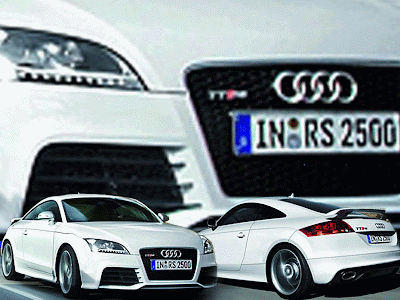
2009 Audi Sports Car roadster/coupe TT-RS

Although the 2009 Audi TT has improved greatly on previous models in terms of general fun-factory and handling, enthusiasts still don't place it in the same league as the M Coupes, Boxter/Caymans and S2000s of the world. The S line model, which debuted in 2008, served up a big helping of improvements, but Audi fans still wanted more.
2009 Audi TT-RS
Audi is once again producing a five-cylinder engine – and a very special one at that. Arriving at dealerships this summer, the TT RS has a turbocharged 2.5-liter engine with direct gasoline injection; it produces 250 kW (340 bhp) and 450 Nm (331.90 lb.-ft.) of torque. The blazing five-cylinder engine enables the TT RS to perform extraordinary feats. In conjunction with quattro permanent all-wheel drive and a high-performance chassis, the engine makes the compact Audi TT RS a top-notch sports car – available as a coupé or roadster.
Sporty five-cylinder gasoline engines have a long legacy at Audi. The most famous is arguably the turbocharged 2.1-liter engine in the Audi quattro. The first version, which was launched in 1980, offered an impressive 147 kW (200 bhp). And the Sport quattro from 1984, directly inspired by motorsport, delivered a whopping 225 kW (306 bhp). For 25 years, turbochargers and quattro have been a dynamic formula for success.
Audi has resumed using this recipe. Designed from scratch, the five-cylinder engine combines a turbocharger with FSI direct gasoline injection to elevate the TT RS to a high-performance sports car. The TFSI delivers 250 kW (340 bhp) from a displacement of 2,480 cc (151.34 cu in): a specific output of 100.8 kW (137.1 bhp) per liter.
The power-to-weight ratio is also outstanding. In the case of the Coupé, which weighs in at a mere 1,450 kilograms (3,196.70 pounds), the power-to-weight ratio is just 4.3 kilograms per bhp.
The TT RS Coupé rockets from 0 to 100 km/h (0 to 62.14 mph) in 4.6 seconds; the Roadster needs just a tenth of a second longer. The limited top speed of 250 km/h (155.34 mph) is merely the official figure for both versions; as an option, Audi can increase it to 280 km/h (173.98 mph).
Almost even more impressive is the aggressive pulling power. The maximum torque of 450 Nm (331.90 lb.-ft.) is always available between 1,600 and 5,300 rpm. In addition, the TT RS overtakes without the slightest effort. Last but not least, its engine makes passengers’ skin tingle time and again thanks to its speedy and powerful response, its inspiring free-revving character, and its unmistakably guttural tailpipes: five-cylinder classical music by Audi!
As an uncompromising sports-car engine, the 2.5-liter TFSI is ultra-compact. Just 49 centimeters (19.29 inches) in length, it is ideally suited for transverse installation in the TT RS. And its weight of just 183 kilograms (403.45 pounds) also sets a record. The crankcase is made of vermicular-graphite cast iron. This high-tech material unites the utmost in strength with low weight; it has otherwise only been used for the large TDI engines from Audi. Perfectly placed reinforcements enhance the block’s loadability. The lightweight cylinder head, the pistons, and the connecting rod are lightweight as well as high-strength.
The ultra-powerful five-cylinder engine is extremely fuel-efficient, requiring an average of just 9.2 liters/100 km [25.57 mpg] as regards the Coupé (Roadster: 9.5 l/100 km [24.76 mpg]). Switchable flaps in the intake manifold mix the incoming air in a calculated configuration. Injected at a pressure as high as 120 bar by the common-rail system, the gasoline swirls intensely in the combustion chamber – which in turn cools the walls. This subsequently facilitates a compression ratio of 10.0:1, which is very high for a turbocharged engine. Both of the adjustable camshafts, controlled via chains, also enhance charging efficiency with respect to the air-fuel mixture.

Modern Motorsport Ducati Hypermotard 1100 Sport Standard 2009


The Hypermotard takes on urban canyons and mountain curves with total abandon. Its purpose is single-minded - to thrill.
The aggressive 'motard' styling and stance combine with Ducati 'Superbike' technology to deliver the best of both worlds. With a riding position that ensures total control, the exceptionally slim and incredibly light Hypermotard is ready to dominate every inch of asphalt with big-bore acceleration and dynamic road holding that redefines the street experience.
High performance starts with attitude and the Hypermotard is the most aggressive motorcycle in the Ducati family. Reduced to its essentials - it is extreme, untamed, over-the-top and always hungry for the next challenge. It offers what no ordinary supermotard can - speeds exceeding 125mph on the race track, fuel injection, and 90 Desmo hp - all combined in an unmistakable Ducati package offering unbridled passion for motorcycles that are truly unique and exhilarating.
The Road Ahead Sets the Challenge
When first unveiled the Hypermotard won instant praise. Just hours after its launch it was awarded "Best of Show" and motorcyclists the world over now understand why.
By taking the minimalist supermotard racing concept, then adding Ducati's unrivaled twin-cylinder power and Superbike technology, the Hypermotard delivers a remarkable experience. The Hypermotard 1100 is extreme and thrilling to ride every day of the week. It turns familiar roads into an all new heart-thumping experience.
Taking its attitude into the city or the mountains with a street smart confidence and no respect for conformity, the Hypermotard is ready for any challenge.
The Hypermotard 1100 is powered by the incredible Ducati two-valve, air-cooled, Desmodromic Dual Spark engine, giving it outstanding power delivery, from a grunt at low rpm to a singing howl at redline. The Hypermotard 1100 engine flexes its muscles with a 98mm bore and short 71.5mm stroke to make 90 horses and 76 pounds of torque.
Compact and purposeful, the Desmo Twin engine's light weight and narrow L-Twin layout, no wider than a single cylinder, ensures that the bike is lean and agile. The air-cooled design eliminates all the water radiators, hoses, valves, reservoirs and pumps, keeping the motorcycle's weight down to a minimum 390lb (177kg) and its lines clean and race-like.
Two spark plugs per cylinder, Dual Spark, optimises combustion temperatures and increases maximum power and torque throughout the rev range, enhancing reliability and reducing fuel consumption. Power is optimized with fuel injected into 45mm throttle bodies and a 2-1-2 exhaust system that exits high behind the rear of the saddle.
In keeping with its extreme character, engineers chose the Ducati 'dry' racing-style clutch for the Hypermotard, the popular choice of thousands of Ducatisti the world over.
With more experience and success with twin-cylinder high performance engines than any other manufacturer in the modern era; the air-cooled L-Twin remains central to Ducati's philosophy of motorcycling. This experience, plus constant investment in quality by design, advanced materials and engineering techniques, has enabled the distance between service intervals to increase to 7,500 miles (12,000km).

Modern Motorsport Ducati Hypermotard 1100 Sport Standard 2009

Exclusive Vespa GTS 250 Scooter 2009


A few design changes have been made to add fluidity and dynamism to the look of the GTS, combining the Vespa's classic, exclusive look and maneuverability with the performance and technological prowess of big touring scooters. From the front, the Vespa GTS is instantly recognizable by the position of the headlight placed midway down the shield next to the horn, reminiscent of 1950s Vespas, which had a small lamp on the mudguard. The impeccably finished, double-stitched saddle adds a racy touch while improving the comfort of the ride.
The GTS also features a combination digital/analog dashboard-simple and stylish, the LCD display includes a fuel gauge, a rev counter bar, full and partial mileage, a digital clock with the date, an outside air temperature gauge and a coolant temperature gauge. Analog instruments include a speedometer and a comprehensive set of warning lights: turn signals, position and high beam lights, oil pressure, fuel reserve, the immobilizer LED light and the injection control LED light.
While its natural riding position and ergonomics have always made the Vespa comfortable, the seat on the GTS has a new shape and material for an even better ride. Carrying some bags? A rear luggage rack comes standard, and the underseat storage opens with the press of a button, making those spontaneous trips out of town convenient and hard to resist.


Specifications

ENGINE TYPE : Single cylinder, four-stroke, four-valve, electronic injection, catalytic
QUASAR :(QUArter liter Smooth Augmented Range)
CYLINDER CAPACITY : 244cc
BORE x STROKE : 2.8" x 2.36" (72 mm x 60 mm)
MAX POWER at SHAFT : 16.2 kW at 8,250 rpm (22 CV)
MAX TORQUE : 20.2 Nm at 6,500 rpm
FUEL / TANK CAPACITY : Unleaded minimum 91 octane / 2.4 gallons (9.2 litres)
DISTRIBUTION : Chain driven SOHC (single overhead camshaft)
COOLING SYSTEM : Liquid
LUBRICATION : Wet sump, chain-driven lobe pump, filtration during aspiration and discharge
IGNITION : Electronic (with inductive discharge, variable spark advance and three-dimensional mapping)
GEARS CVT : (Continuously Variable Transmission) with torque server
CLUTCH : Automatic centrifugal dry clutch with dampers
CHASSIS : Load-bearing sheet steel chassis with welded structural supports
FRONT SUSPENSION : Single-sided trailing arm with dual chamber hydraulic shock absorber with coaxial spring
REAR SUSPENSION : Helical spring with adjustable four-position pre-load and two dual effect hydraulic shock absorbers
FRONT BRAKE : Ø 8.66" (220 mm) disc
REAR BRAKE : Ø 8.66" (220 mm) disc
FRONT TIRE : Tubeless 120 / 70, 12"
REAR TIRE : Tubeless 130 / 70, 12"
LENGTH : 76.4" (1,940 mm)
WIDTH : 29.7" (755 mm)
WHEELBASE : 54.9" (1,395 mm)
SEAT HEIGHT : 31.1" (790 mm)
DRY WEIGHT : 326 lbs (148 kg)
TYPE-APPROVAL : EPA and CARB
AVAILABLE COLORS : Dragon Red, Black, Excalibur Grey, Giallo Lime (Yellow)

2009 KIA Sportage

2009 KIA SportageKIA Sportage Outlander SUV 1

The Kia Sportage 2009 will be receiving a minor facelift. This is due to be launched soon, unless already in the local showroom and we are not informed about it. Incidentally, this new version has been sold in China for a while now.

Most significantly, if at all, is a new front end. Machinery and options that are expected to remain the same with the Sportage today.

2009 KIA SportageKIA Sportage Outlander SUV 2

2009 KIA SportageKIA Sportage Outlander SUV 3

2009 KIA SportageKIA Sportage Outlander SUV 4

2009 KIA SportageKIA Sportage Outlander SUV 5

2009 KIA SportageKIA Sportage Outlander SUV 6

2009 KIA SportageKIA Sportage Outlander SUV 7

2009 Bugatti Sports Cars Veyron Type 35 Grand Prix Edition

In a highlight on this year’s agenda of centennial celebrations, Bugatti Automobiles S.A.S. presented four Bugatti Veyron specials at Villa d’Este Concorso d’Eleganza. These one off models are reminders of Bugatti’s glorious motor-racing history which played a central role in popularising and ultimately establishing the myth which the brand continues to enjoy to this day.
2009 Bugatti Sports Cars Veyron Type 35 Grand Prix Edition
The Bugatti brand is almost inextricably linked to the Type 35. The Type 35 Grand Prix was by far the most successful racing model. The unmistakable radiator grille and eight-spoke aluminum wheels of the Type 35 have become defining features of the Bugatti automobile. In its day, the Grand Prix was also well ahead of its time in terms of engineering ingenuity.
The front axle design of this vehicle, which, for reasons of weight minimization, is hollow, is a true masterpiece of workmanship and was deemed nothing less than revolutionary. Its springs were passed through the axle to produce a high level of stability. The Grand Prix’s brake drums were integrally fitted into its lightweight aluminum wheels. Unfastening the central wheel nut allowed the wheel to be easily removed within a matter of seconds and the brake to be exposed. This was a crucial advantage at the pit stop.
The blue racers made their first appearance on the race track at the Grand Prix held by Automobil Club de France in Lyon in 1924. In the decade that followed, they remained practically unchallenged thanks to sophisticated manufacturing efforts, their lightweight design and easy handling. During that ten-year era, they won almost 2000 races – more than any other model ever has.
Grand Prix races were highly fashionable events in those days, and Bugatti was not the only brand with considerable interest in substantiating the reputation of its products by winning races. In fact, in the 1920s, Europe was regularly host to a number of different races in different countries on a single weekend. The teams set up by different automobile manufacturers competed at popular race circuits such as Targa Florio, Le Mans, Monza and Spa as well as in Rome, Nice, Antibes and even a village in Alsace.
The main reason Bugatti won such an enormous number of races – on the back of which successes the brand was also able to forge its image – was the fact that Bugatti sold not only its normal sports and touring cars to private buyers, but its racing cars too. Thus it was that its automobiles took part in such a large number of Grand Prix events.
Tradition being what it is, the Bugatti Veyron Specials built to mark the 100th anniversary of the brand feature the racing colors of the respective countries: blue for France, red for Italy, green for England and white for Germany. Each of the four new Veyrons has a specific “predecessor” in the form of an original Grand Prix Bugatti on which it was modelled.
These four historic race cars represent the generation of legendary Bugatti Grand Prix racers which were piloted by world-famous race-car drivers and which scored countless racing victories in the 1920s and ‘30s. Each of the four Veyron Specials is named after a Bugatti race-car driver of the 1920s and 30s. Jean-Pierre Wimille has given the blue Veyron its name, Achille Varzi the red one, Malcolm Campbell the green one and Hermann zu Leiningen the white Veyron.
“We have put a lot of effort into translating colour and material, the defining characteristics of our historic role models, into the designs of the modern-day Veyrons,” explains Alasdair Stewart, Director Sales & Marketing at Bugatti Automobiles S.A.S. “We have taken extreme care to match the original colours of the original race cars, exterior and interior”
On Sunday, the four historic racing Type 35s and the four modern-day Centenaire Edition Veyrons will be exhibited alongside each other in the park of Villa Erba for the first and only time.
Ahead of that presentation, Bugatti will on Saturday be prominently represented in the park of Villa d’Este by a special-display-class exhibition of models, which will serve to portray the 100-year history of the brand. Bugatti’s participation in the classic Concorso d’Eleganza Villa d’Este at Lake Como will be the second highlight event to mark the carmaker’s centennial celebrations after it took part in the International Geneva Motor Show in early March.
This latest event will be followed by the Pebble Beach Concours d’Elegance in California in mid-August and the main celebratory event on 12 September in Molsheim (Alsace), which has been the home of this unparalleled automobile brand for 100 years.

2009 Bugatti Sports Cars Veyron Type 35 Grand Prix Edition

In a highlight on this year’s agenda of centennial celebrations, Bugatti Automobiles S.A.S. presented four Bugatti Veyron specials at Villa d’Este Concorso d’Eleganza. These one off models are reminders of Bugatti’s glorious motor-racing history which played a central role in popularising and ultimately establishing the myth which the brand continues to enjoy to this day.
2009 Bugatti Sports Cars Veyron Type 35 Grand Prix Edition
The Bugatti brand is almost inextricably linked to the Type 35. The Type 35 Grand Prix was by far the most successful racing model. The unmistakable radiator grille and eight-spoke aluminum wheels of the Type 35 have become defining features of the Bugatti automobile. In its day, the Grand Prix was also well ahead of its time in terms of engineering ingenuity.
The front axle design of this vehicle, which, for reasons of weight minimization, is hollow, is a true masterpiece of workmanship and was deemed nothing less than revolutionary. Its springs were passed through the axle to produce a high level of stability. The Grand Prix’s brake drums were integrally fitted into its lightweight aluminum wheels. Unfastening the central wheel nut allowed the wheel to be easily removed within a matter of seconds and the brake to be exposed. This was a crucial advantage at the pit stop.
The blue racers made their first appearance on the race track at the Grand Prix held by Automobil Club de France in Lyon in 1924. In the decade that followed, they remained practically unchallenged thanks to sophisticated manufacturing efforts, their lightweight design and easy handling. During that ten-year era, they won almost 2000 races – more than any other model ever has.
Grand Prix races were highly fashionable events in those days, and Bugatti was not the only brand with considerable interest in substantiating the reputation of its products by winning races. In fact, in the 1920s, Europe was regularly host to a number of different races in different countries on a single weekend. The teams set up by different automobile manufacturers competed at popular race circuits such as Targa Florio, Le Mans, Monza and Spa as well as in Rome, Nice, Antibes and even a village in Alsace.
The main reason Bugatti won such an enormous number of races – on the back of which successes the brand was also able to forge its image – was the fact that Bugatti sold not only its normal sports and touring cars to private buyers, but its racing cars too. Thus it was that its automobiles took part in such a large number of Grand Prix events.
Tradition being what it is, the Bugatti Veyron Specials built to mark the 100th anniversary of the brand feature the racing colors of the respective countries: blue for France, red for Italy, green for England and white for Germany. Each of the four new Veyrons has a specific “predecessor” in the form of an original Grand Prix Bugatti on which it was modelled.
These four historic race cars represent the generation of legendary Bugatti Grand Prix racers which were piloted by world-famous race-car drivers and which scored countless racing victories in the 1920s and ‘30s. Each of the four Veyron Specials is named after a Bugatti race-car driver of the 1920s and 30s. Jean-Pierre Wimille has given the blue Veyron its name, Achille Varzi the red one, Malcolm Campbell the green one and Hermann zu Leiningen the white Veyron.
“We have put a lot of effort into translating colour and material, the defining characteristics of our historic role models, into the designs of the modern-day Veyrons,” explains Alasdair Stewart, Director Sales & Marketing at Bugatti Automobiles S.A.S. “We have taken extreme care to match the original colours of the original race cars, exterior and interior”
On Sunday, the four historic racing Type 35s and the four modern-day Centenaire Edition Veyrons will be exhibited alongside each other in the park of Villa Erba for the first and only time.
Ahead of that presentation, Bugatti will on Saturday be prominently represented in the park of Villa d’Este by a special-display-class exhibition of models, which will serve to portray the 100-year history of the brand. Bugatti’s participation in the classic Concorso d’Eleganza Villa d’Este at Lake Como will be the second highlight event to mark the carmaker’s centennial celebrations after it took part in the International Geneva Motor Show in early March.
This latest event will be followed by the Pebble Beach Concours d’Elegance in California in mid-August and the main celebratory event on 12 September in Molsheim (Alsace), which has been the home of this unparalleled automobile brand for 100 years.

2009 Bugatti Sports Cars Veyron Type 35 Grand Prix Edition

In a highlight on this year’s agenda of centennial celebrations, Bugatti Automobiles S.A.S. presented four Bugatti Veyron specials at Villa d’Este Concorso d’Eleganza. These one off models are reminders of Bugatti’s glorious motor-racing history which played a central role in popularising and ultimately establishing the myth which the brand continues to enjoy to this day.
2009 Bugatti Sports Cars Veyron Type 35 Grand Prix Edition
The Bugatti brand is almost inextricably linked to the Type 35. The Type 35 Grand Prix was by far the most successful racing model. The unmistakable radiator grille and eight-spoke aluminum wheels of the Type 35 have become defining features of the Bugatti automobile. In its day, the Grand Prix was also well ahead of its time in terms of engineering ingenuity.
The front axle design of this vehicle, which, for reasons of weight minimization, is hollow, is a true masterpiece of workmanship and was deemed nothing less than revolutionary. Its springs were passed through the axle to produce a high level of stability. The Grand Prix’s brake drums were integrally fitted into its lightweight aluminum wheels. Unfastening the central wheel nut allowed the wheel to be easily removed within a matter of seconds and the brake to be exposed. This was a crucial advantage at the pit stop.
The blue racers made their first appearance on the race track at the Grand Prix held by Automobil Club de France in Lyon in 1924. In the decade that followed, they remained practically unchallenged thanks to sophisticated manufacturing efforts, their lightweight design and easy handling. During that ten-year era, they won almost 2000 races – more than any other model ever has.
Grand Prix races were highly fashionable events in those days, and Bugatti was not the only brand with considerable interest in substantiating the reputation of its products by winning races. In fact, in the 1920s, Europe was regularly host to a number of different races in different countries on a single weekend. The teams set up by different automobile manufacturers competed at popular race circuits such as Targa Florio, Le Mans, Monza and Spa as well as in Rome, Nice, Antibes and even a village in Alsace.
The main reason Bugatti won such an enormous number of races – on the back of which successes the brand was also able to forge its image – was the fact that Bugatti sold not only its normal sports and touring cars to private buyers, but its racing cars too. Thus it was that its automobiles took part in such a large number of Grand Prix events.
Tradition being what it is, the Bugatti Veyron Specials built to mark the 100th anniversary of the brand feature the racing colors of the respective countries: blue for France, red for Italy, green for England and white for Germany. Each of the four new Veyrons has a specific “predecessor” in the form of an original Grand Prix Bugatti on which it was modelled.
These four historic race cars represent the generation of legendary Bugatti Grand Prix racers which were piloted by world-famous race-car drivers and which scored countless racing victories in the 1920s and ‘30s. Each of the four Veyron Specials is named after a Bugatti race-car driver of the 1920s and 30s. Jean-Pierre Wimille has given the blue Veyron its name, Achille Varzi the red one, Malcolm Campbell the green one and Hermann zu Leiningen the white Veyron.
“We have put a lot of effort into translating colour and material, the defining characteristics of our historic role models, into the designs of the modern-day Veyrons,” explains Alasdair Stewart, Director Sales & Marketing at Bugatti Automobiles S.A.S. “We have taken extreme care to match the original colours of the original race cars, exterior and interior”
On Sunday, the four historic racing Type 35s and the four modern-day Centenaire Edition Veyrons will be exhibited alongside each other in the park of Villa Erba for the first and only time.
Ahead of that presentation, Bugatti will on Saturday be prominently represented in the park of Villa d’Este by a special-display-class exhibition of models, which will serve to portray the 100-year history of the brand. Bugatti’s participation in the classic Concorso d’Eleganza Villa d’Este at Lake Como will be the second highlight event to mark the carmaker’s centennial celebrations after it took part in the International Geneva Motor Show in early March.
This latest event will be followed by the Pebble Beach Concours d’Elegance in California in mid-August and the main celebratory event on 12 September in Molsheim (Alsace), which has been the home of this unparalleled automobile brand for 100 years.